Wednesday, October 30, 2013

Need Magnesium?


We need lots of vitamins and minerals to thrive. Magnesium is one of them. The best way to take in our nutrients is through our foods. Even a whole foods based supplement cannot compare with the food The Lord has given us. No, Centrum doesn't cut it. It's a rock that doesn't break down. Stop wasting your money.

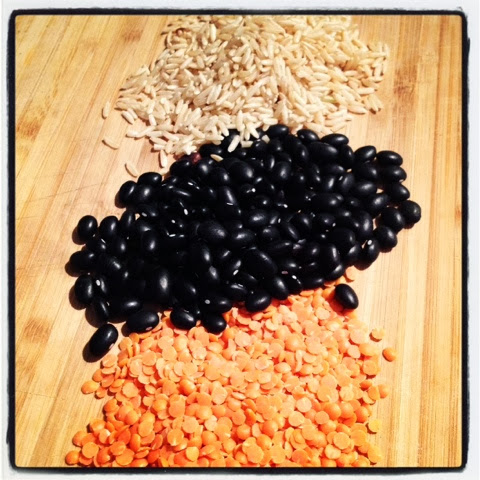
There are lots of foods that contain magnesium like bananas, beans, lentils, brown rice, oats, quinoa, avocados, nuts, seeds, spinach, sea veggies, and more. 

Magnesium is a mineral that acts as a catalyst for so many areas of the body to function properly. We need it for regulating blood sugar, to eliminate properly, strength of the heart, for energy, as well strength and form of bones and teeth. The recommended daily allowance is 300-400mg.

 A vitamin D deficiency severely effects our magnesium levels. Be sure to supplement with a good vitamin D3 like pure drops in chocalciferol form or Garden of Life Raw D3. Most adults need at least 5000 IUs of D3 daily.

Magnesium deficiencies can be very dangerous. As you can see magnesium is a mineral found in plant foods. If yours or your child's diet is lacking in plant foods then you are highly likely to be deficient. Also depleted soils that are not mineral rich especially for conventionally grown crops is a problem. Organic or sustainably grown is a much better bang for your nutritional buck.

If you get headaches, have sleep issues, muscle or leg cramps, have chronic fatigue or nausea, you may be deficient.


Another super way to absorb magnesium is through the skin. This is easily done by using a magnesium gel or spray. Sure you can buy them, but they cost a ton. Here's how to make your own below.

Magnesium Spray

You'll need:
1/2 Cup Magnesium Chloride Flakes
1/2 Cup Distilled Water
4oz Glass Spray Bottle

Boil the water
Turn off the heat when it reaches a boil
Pour the flakes into the water
Stir until the flakes dissolve 
Let the water cool
Using a funnel pour the solution into the bottle

Once it's ready you can use it daily. The best place to spray it is on your stomach. You can spray it on your legs too. Use it after you shower or bathe so your pores are nice and open to receive it well. This is great for kids too! It's really difficult to get too much magnesium.

As always I'm your holistic health counselor, be healthy, be blessed, and be a good steward!


Monday, October 28, 2013

Get Up & Go Smoothie


It's a great morning and it's going to be a busy day for Kingdom Health and myself. We have such hectic lives! Taking advantage of super foods to super charge your day is an emphatic necessity. Our food supply has been so drained of nutrients due to genetic modification, chemicals/pesticides, and the manufacturing of lab created fake food like products that it's difficult to get authentic nutrition. 

Super foods are a great way to get a maximum health value on minimal amounts. I've done blog posts on my favorite superfoods before. There are several and truly there is debate about which foods should be classified as such. The foods are called super foods are named that way because their plant life hasn't been tainted like most crops.

Here is a favorite version of a super food smoothie that I love to drink. I'll list the basic benefits to each super food below. Try each super food out and see how they work in your body. Remember everyone is different. One person may do well with one food and another person may not react well to it at all.

Ingredients:

3 Tbsp Hempseed
2 Tbsp Raw Cacao Powder
1/2 Tbsp Ground Ceylon Cinnamon
1/2 Tbsp Chia seeds
3 Medjool Dates
1 Handful Goji Berries
1 Tsp Spirulina
2 Inch Hunk Peeled Raw Ginger
1 Tbsp Organic Gelatinized Maca Powder
Pinch of Ground Organic Cayenne 
1 1/2 Cups Filtered Water
1 Cup Ice

Basic Run Down of Nutrition:

Hempseed: complete plant protein, healthy gamma linoleic acid (that's a good fat), fiber

Cacao: (this is raw chocolate) energy, antioxidants

Ceylon Cinnamon: not all cinnamons are equal, this is the cinnamon with the most medicinal value for being anti-inflammatory and regulating blood sugar, its also naturally sweet and delicious

Chia Seeds: energy, omega 3 fatty acids, fiber, calcium

Medjool Dates: healthy sugar, fiber, just plain yummy

Goji Berries: iron, protein, fiber, encourages HGH (human growth hormone: the youth factor) to grow, libido stimulator

Spirulina: calcium, complete protein, iron, very detoxifying 

Ginger: anti-inflammatory, soothing to the gut, immune boosting, naturally warming, vitamin C

Maca: Peruvian root best used gelatinized meaning lightly steamed over raw due to digest ability and absorption, balances hormones, nourishes hypothalamus, energy, libido stimulator

Cayenne: naturally warming, regulates blood pressure, can be a natural blood thinner, improves circulation

Let me know if you try this out! Truly everything in this smoothie is optional. Play...see what your body needs and does well with then drink it up! Be healthy, be blessed, and be a good steward!


Wednesday, October 9, 2013

Support Your Winter Wellness!


Tis the season for celebrating, family, friends, decorations, leaves falling, hay rides, school activities, and lots of sniffles and sneezes. Did you know it does NOT have to be that way? Did you know you CAN prevent the inevitable? Did you know you DO NOT have to get the flu shot? It is entirely possible to not pump poisons through your veins and stay healthy, unbelievable I know, but so true!

I blame cold and flu season on one word: SUGAR! Sugar falls under the category of white sugar, white rice, white flour, HFCS (high fructose corn syrup), corn syrup, maltose, dextrose, and maltodextrin. All of these unhealthy forms of sugar attack our bodies form the inside out. It breaks down our immune system, attacks our brains, and raises our blood sugar levels to unbelievable levels then quickly leaves us to crash splat on the ground beyond exhaustion.Sugar substitutes are also extremely dangerous like aspartame, sodium saccharin, and sucralose. These fake sugars are carcinogenic so steer clear. Choose better forms of sugar like coconut sugar, whole cane organic sugar (rapadura), dates, red bananas, coconut nectar, raw honey, and real organic maple syrup. Also you can use stevia, a natural plant used as a sweetener. Go for the leaves or whole concentrated organic drops, not the white powder.

The really super extraordinarily frustrating  factor....it can all be avoided! I work at a natural supplement store part time and this is the busiest season of the year for the store. First I want to say that I applaud anyone using truly natural supplements for supporting their health, no doubt! Truth, sometimes you get sick, even me, your holistic health counselor. What doesn't happen to me is that I do not get sick every week or month, get a cold I just can't kick, nor do I get the flu every year. Wanna know why? I don't eat that nasty bleach filled chemical sugar....and neither do my children. Sugar by certain health experts like Dr. Joseph Mercola, renowned osteopathic medical doctor, has called sugar a type of narcotic.

I love you my readers, so please don't take this as me being harsh, rather me trying to save you hours and dollars spent the doctors office.So first things first, get out the fake sugar. Whole real sugar on the other hand in monitored amounts is perfectly fine. Lets be realistic, we like sweet stuff. In small amounts here and there it is totally fine in my honest opinion. Others may disagree, but I am a realist. I do not live in happy little healthy land where I never touch a brownie or cookie. I just make wiser choices, make them myself, and limit it to one or two. I use delicious real, whole, low gylcemic alternatives like coconut sugar.

Twelve Tips to Support a Healthy Season
  • Remove fake or unhealthy versions of sugar
  • Eat real, whole foods
  • Reduce or remove gluten filled foods
  • Drink raw unpasteurized apple cider vinegar everyday in your water
  • Eat foods with raw garlic each week like guacamole or put it in salad dressing
  • Make real chicken stock from a free range organic chicken, the store bought stuff is mostly salt and water; use this for all your soups
  • Put Thieves essential oil blend on the bottoms of your feet with organic, unrefined coconut oil after each bath or shower
  • Reduce or remove caffeine
  • Take digestive enzymes before you eat cooked food
  • Take probiotics daily
  • Use a neti pot at the first sign of anything in the nose or sinuses
  • Go to sleep between 9pm and 10pm
I hope this article helps you during this winter season. These tips are really simple, yet will make an enormous difference.  If you have any healthy tips be sure to share them below. Be blessed, be healthy, and be a good steward!

Resources:

http://articles.mercola.com/sites/articles/archive/2010/04/20/sugar-dangers.aspx

http://articles.mercola.com/sites/articles/archive/2011/05/02/is-sugar-toxic.aspx


Sunday, October 6, 2013

Pumpkin Pie Smoothie


I am so elated it is Autumn because of one word....Pumpkin! There are so many lovely varieties of this winter squash. It can be prepared in numerous fashions as well. What a joy to play in the kitchen!!! Pumpkins are so very nutritious in addition to being delicious! There is over half an ounce of fiber in one cup, 394 mg Potassium, 1.2 gr Protein, and 197% of the daily value of Beta-Carotene (precursor to Vitamin A). One handful of seeds is your zinc intake for the day.

Pumpkins are a versatile food. They can be eaten cooked or raw, savory or sweet. The seeds and flesh are edible. Getting our nutrition from our food, versus supplements is always a better route. There is not a supplement around, being an isolated portion of the food that will ever be just as good as the real deal.

Today I thought it would be fun to share a yummy recipe and video. Here is a great way to start your day...a Pumpkin Pie Smoothie! It includes "raw pumpkin puree." Watch the video to see how to make it!

Smoothie Ingredients:

1/2 Cup Raw Pumpkin Puree (organic canned will do)
1-2 inch Chunk Raw Ginger
1 Cup Whole Coconut Milk (homemade or organic BPA free canned by Native Forest) or Unsweetened Almond Milk (again homemade is best)
1/2 Tsp Raw Vanilla Bean Powder
1 Tsp Organic Allspice
1 Tsp Ceylon Cinnamon
1 Tsp Chia seeds
2-3 Tbsp Hempseeds
2 Medjool Dates
2 Cups of Ice
*Optional: 1 Tbsp Carob Powder
*Optional: 2 Tsp Maca (gelatinized)

Watch the video below to see how to make raw pumpkin purée!


Friday, September 27, 2013

Super Easy Healthy Popsicles!

When you are going the healthier, whole foods route some think you have to give up your favorite things. While that may be true with a few things for the most part there is a real, yummy, nutritious version of what you love to eat. Knowing what to substitute is exceedingly important when you have children!

We live in a society that makes it difficult to eat healthy and raise our children that way. I want my children to take care of the body the Lord has given them. 1 Corinthians 6:19 says, "Do you not know that your bodies are temples of the Holy Spirit, who is in you, whom you have received from God? You are not your own." We know not the day nor the hour when we will return with the Lord Yeshua, nonetheless preserving our health makes us good stewards so that we can be used at any time in any way.

Back to healthy choices, we simply cannot go around telling our children NO constantly. We have to pick our battles, and quite frankly should say yes if a request is within reason. A child's fond warm weather past time are Popsicles. Even I can remember as a child running for the ice cream truck. Knowing now what is in those cool desserts I gladly run in the other direction. Regardless, it doesn't take away the desire for a sweet treat.

Earlier this week I received my BPA Free Popsicle molds...I was so excited to try them out! So I figured I'd snap a few shots and share the process with you. I kept it fairly simple. I ordered the molds from Amazon.

Ingredients:

2 Cups Organic Frozen Mixed Berries
1 Can Native Forest Organic Whole Coconut Milk
2 Tbsp Coconut Secret Coconut Nectar


Next just put everything into your blender.


Depending on the speed of your blender make it smooth and creamy.


Then it is as simple as pouring into the molds. Truth be told this filled almost all of my molds completely. Just one was a tad short. I didn't feel like opening another can. I let them freeze for 3 hours.  


They turned out really well. Feel free to use any natural sweetener you like. Depending on the fruit you use you may be able to avoid it altogether. Tell me if you try them out! Be healthy, be blessed, and be a good steward!

Tuesday, September 24, 2013

Necessity of Enzymes


So anyone who knows me well knows my passion in holistic health along with building a strong nutritional base with real, whole foods is gut health. I will attempt to not drag out this post. I've been known to be quite long winded when it comes to talking about our digestive system. It is so important that is remain healthy in order for our immune system to be up to par.

Today's Topic: Enzymes

You might remember this word from high school or college, but not be all too familiar with what they are, do, or how they work. So simply put enzymes are little proteins in themselves that are catalysts for different systems in the body to work properly. Each system the body has its own limited store of enzymes in order to function.

The digestive system is the only system that does not have its own enzymes. There is a wonderful reason for this arrangement. We were designed by the living holy God, Yeshua, to get our enzymes from living foods. Enzymes from food are a crucial part of digestion. Our food cannot be broken down and digested properly without them.

Again we can only receive enzymes from raw, living foods. Enzymes die at 118-120 degrees F. That means most of America is eating enzymatically dead and deficient food. That is a huge problem in our culture because we are walking round with improperly digested food, which causes tremendous distress in our bodies.

Lack of enzymes causes stomach upset, malabsorption of nutrients, constipation, sugar cravings or addictions, and a range of other symptoms. Continuing to eat foods without enzymes breaks down our immune system and causes it to be ineffective in resisting disease. Other systems then become faulty like the nervous and endocrine systems.

What happens when we continue in this pattern is our bodies are so smart. They recognize the need for enzymes. When we eat enzymatically dead food a light bulb goes off in the body. So the body says to itself, "Mmmmmmm, time to eat.......but wait! Where are the enzymes? I can't digest my food properly? I know, I know, I will borrow enzymes from my body's own bank of enzymes."

Remember the body does have limited, key word being "limited" stores, of its own enzymes. When our bodies borrow from their bank of enzymes, something happens, it's not rocket science, there then becomes a depletion. So it's just like when you borrow $50 here and $75 there from your savings account. After a while your account becomes lower and lower. What happens if you write a check and you don't have enough in the bank? You go into the red or negative, right. The same concept happens in our bodies with enzymes.

We simply need enzymes to live. So we get them two ways, From either raw food that has NOT been cooked as well as digestive enzyme capsules.Taking digestive enzymes capsules right before you eat any cooked food can make a world of difference. Different types of foods require different types of enzyme strains. Each digestive enzyme has a different function in when it breaks down that particular food.

You can purchase specific enzymes or products to help break down one particular type of food. I think it is far more beneficial to purchase a supplement with high potency and lots of different enzyme strains. This is especially true at a restaurant. You never know kitchen practices or what is used. Those of us with specific eating intolerances or even allergies really need to use enzymes before eating food not prepared in your kitchen. 

Knowingly of course, if you have an allergy or auto immune disorder do not think taking specific enzymes beforehand gives you a license to be careless. Always avoid those foods. However, accidents or cross contamination does occur. Taking enzymes prior helps the body adjust and know what do.

In general without getting too specific the enzymes and their jobs are as follows:

Protease breaks down protein.

Lipase breaks down fat.

Cellulase breaks down cellulose/fiber.

Amylase breaks down carbohydrates.

Lactase breaks down dairy.

Raw foods were created for us to be consumed in tact so that we could absorb as much nutrition as possible. Making raw foods a regular part of your regimen is crucial, whether it be salad, grabbing a piece of fruit, unroasted nuts and seeds, cut up veggies, fermented veggies, or unpasteurized and unhomogenized milk. Yes, I said raw milk! That may surprise some of you newbies to this realm or there may be some of you with your own cow or goat in your back yard. It's become a hot topic so I just want to touch on this one subject to open eyes. I kind of went there in my post about ghee. I already promised this would not be a three page post on gut health.

So dairy is not the devil. Oh I am so gonna get it, I hear it now, its okay. There is NO such thing as lactose intolerance. Gasp! Lactose is the sugar/carbohydrate in milk. Breast milk has more lactose than any other animal milk. Babies are intended to consume breast milk. That of course is in a perfect world. This is not a post on breast feeding, nor is it about moms who can't produce. I love all you mommas out there breastfeeding or not. I've helped clients make homemade formula. I'm just speaking typically.

In order to digest dairy properly, guess....guess what you need, c'mon.....enzymes! Raw milk naturally has lactase, the enzyme needed to break down the lactose so we can digest it. When we consume processed nasty puss, that's my term of endearment for store bought milk, our bodies do not know what to do with it. They get confused. It's not food anymore because those high temperatures didn't just kill the enzymes it altered the chemical structure of the milk. The heat also killed the healthy bacteria. I will not talk about probiotics even though I really, really, really want to right now! I'm not even going to talk about casein, the protein in dairy, and the differences there. Really, check out my post on ghee to learn more about cows, milk, and the differences for nutrition.

So my whole point is there are a lot misunderstood healthy foods out there. We are simply not being given accurate information because that might actually keep us healthy. Oh that is another soapbox.

The Big Picture

All of our bodies and practices are different. The older you become, the less enzymes you have so its really important to replace those enzymes. You can even take enzymes specifically for immune function, but we will get into that another day. You cannot ever get too many either. So don't let that concern you. What you need to know now is enzymes are important. We simply do NOT contain unlimited stores. We need to consume raw foods (anything uncooked or heated under 118 degrees F for enzymes to be alive). If we eat cooked food, the only way for it to break down properly is with enzymes. Taking a high quality, potent, multi-strain enzyme capsule before each cooked meal/snack will decrease stress on the body, preserve enzyme capacity so the enzymes put there can do what they are supposed to do in that particular system, and keep the digestive system functioning at optimum level.

Hope this post sheds some light on what enzymes are and why they are so important! Be blessed, be healthy, and be a good steward!


Friday, September 20, 2013

I Love Fat!


 We live in a very confused culture and time. What scripture says about what is right being called wrong and what is wrong being called right was so spot on for so many areas of our lives. Food is definitely a category where that deems accurate. There are more dietary theories and misconceptions than I can count. The dangerous part is with many of them there is a little truth mixed in with a little lie and in a case like that it is easy to blur the lines and truly understand nutrition.

In the 1990's the rage was zero to low fat made foods. I can remember being in high school and priding myself on all of my low fat recipes, especially using the low fat dairy products. I was famous for my zero fat sour cream dip at parties (barf!!!!!!). It's really amazing how different someone can be over the course of 6-7 years. Now it seems all I eat are lots of veggies, a minimal amount of animal protein, some fruit and gluten free grains/pseudo grains, and quite a bit of fat. I consume what some would consider an extremely high fat diet. Yet, I weigh what I did in high school as a teenager who danced ballet and jazz 4 nights a week in a studio and worked out for an hour each morning. I am active now, but no where as rigorous. I've had two children since then and it was only when I started eating this way that the weight I gained from getting pregnant came off.

Fat is such an important part of the foods that we eat. We need it for digestion, brain, heart, immune, lung, and joint health. It is imperative that we consume enough of it to function properly and have energy. It is necessary for healing, especially if you are healing from a gut related issue like candida, crohns, colitis, gastritis, or diverticulitis. I still see low fat being touted in products on the shelf. I give healthy grocery store tours so it is part of my job to know the products lurking around for the consumer. It is so easy to be deceived, incredibly so much so if we do not read labels. Marketing and propaganda are tricky my friends. There are different kinds of fats so being aware of what they are for and why we need them may be of assistance to you on your own health journey.

Types of Fat: Unsaturated and Saturated

The key to eating well with fat is knowing which ones to consume more regularly. Our bodies need balance and only a bit of healthy fat at a time. The more variety we eat in our daily diet, especially fruits and veggies, the better off we will be. Fats come from plants and animals. Both can provide us with healthy and unhealthy fats. Don't believe the hype on a label, do your research. Oh and please, please do yourself a favor, if you happen to watch a particular commercial or "doctor somebody" on television...continue to be a detective for your health. Just because it is on TV or the latest craze doesn't mean it's trustworthy...yes?...Say yes, Marie, yes.

Unsaturated fats are broken up into two categories: polyunsaturated and monounsaturated. These fats come from vegetables and fish sources. Usually monounsaturated fats like olive oil are suggested for health benefits. Soybean oil is technically a monounsaturated fat and I would not in any way recommend this for consumption. Processed unfermented soy (organic and conventional) is a stressor on the thyroid, a hormone disruptor, as well as a catalyst to the inflammation in the gut. It is very difficult to digest. We really want to restrict and stay away from polyunsaturated fats and trans fats. Some polyunsaturated fats are sunflower, safflower, canola, and corn oils. Sesame oil in small amounts is okay al beit a polyunsaturated fat. Trans fats (hydrogenated or partially hydrogenated oils) are polyunsaturated or monounsaturated fats that have been processed with high heat so that they will resist rancidity and stay solid. These are found in crackers, cookies, cakes, cereals, and margarine (ewwwww).

Essential Fatty Acids

So these are the "hot fats" everyone is discussing. First of all I can recall a customer at work asking why these fats are called essential. Well, there is a simple reason to the question. Anything considered essential is a fat or other component that our bodies cannot produce on their own, therefore making it essential for us to consume it. This is where marketing gets tricky.

In health food stores you will see essential oil products with the numbers 3, 6, and 9 on them. So the numbers come from the amount of atoms in those particular fats so we can distinguish them. Our bodies need all of these fats. Truth be told we make omega 9 from the unsaturated fats already inside us and we do not need to take it in extra supplement form. Too much of it can even be a detriment. Olive oil actually is mostly made up of omega 9, not omega 3, as stated in marketing. Olive oil is still wonderful, just only consume the extra virgin cold pressed oils, and don't cook with it. It has a low heat tolerance. Use it more on top of foods and for homemade salad dressings. To be sure of getting a good extra virgin olive oil look for ones sold in a dark glass bottle with a harvest date. The best olive oils are currently coming from California, go USA!

Omega 3 and 6 on the other hand our bodies absolutely must take in from our food supply. In the standard American diet (SAD) most are very unbalanced as far the essential fatty acids are concerned. A good ratio of omega 3 to 6 is pertinent to health and inflammation levels. Too much linoleic acid, which is an omega 6 fat, that happens to be prevalent in the SAD causes high levels of inflammation. This can be found in unhealthy plant oils like soybean, sunflower, canola, and corn. Since many of our livestock animals are eating foods like genetically modified corn and soy, instead of grasses and grubs, they too have high levels in their bodies. Now don't totally get down on omega 6, we need it for sure, we just want to try to consume much more of the better kinds.

Now gamma-linoleic acid (GLA) on the other hand, which is an omega 6, is highly anti-inflammatory and immune system supporting. You can take this in supplement form from borage or evening primrose oils. My preferred way to utilize it is from hemp. Oh how I love hemp. Hemp was one of the super foods that I blogged about a while back, check it out here. So hemp seeds, protein powder (just the ground hemp seeds), and hemp oil all contain GLA. The seeds are delicious, light and a little almondy. Throw them in salad, in smoothies for protein, in homemade raw bars, mix with rice, quinoa, or millet, or top your soup off with some. Just don't cook with the oil, its great for salad dressings though. I say don't cook with it because this particular fat, much like olive oil, has a very low heat tolerance. Heat can change certain fats structures then making them toxic to the body.

Ah so on to the sacred omega 3 fats. Omega 3's help reduce inflammation and improve immunity. They also increase our lung health and cognitive function and brain development. Remember being told when you were young that fish are brain food...well, there is something to that statement. This is why fish oil sales are through the roof. In the fish oil we receive fatty acids called DHA and EPA. These are important for brain and eye health. I'll be honest with you, I think a high quality fish oil supplement, in the right form being triglyceride form, is great! We do this at my house. If I miss a day I don't worry too much since I eat a wide variety of foods with omega 3's. My favorite is fermented cod liver oil by Green Pasture. Fermented versus distilled is better because the fermentation keeps all of the natural health properties in tact, where distillation removes some of them, like some of the natural vitamin D. If you don't have access to fermented I still think a high quality distilled is fine; Nordic Naturals is a good brand for those. Not all brands are equal kids, there are too many rancid fish oils sitting on the shelves of America. Do yourself a favor, go to the local health food store, and pick up your fish oil. Do not buy it at a superstore or regular pharmacy...yuck! If you have EVER burped it up, that means you were consuming the rancid stuff.

Just so you know fish oil is high in omega 3 because of what the fish eat, not because fish naturally contain it. Omega 3's are found in the plants like seaweed that the fish eat. Omega 3's are found in green plants. This is why grass fed cows are so important! Grass has omega 3's, unlike soy and corn with omega 6, so grass eating cows are healthy cows. Healthy cows give us healthy beef and milk (not that I currently consume either). Yay grass fed!

Other fabulous foods that give us omega 3's are raw walnuts, flax seeds (ground unheated), chia seeds (unheated, don't need to be ground, awesome source), sea veggies like dulse and kelp, green algaes such as chlorella and spirulina, truly free range eggs from pastured-free range chickens, wild salmon (not farmed salmon because they eat corn and soy), wild rice (because it is grass), avocados (have omega 6 also; my favorite food), and black beans! The walnuts and flax give us a fat called alpha-lineleic acid. These turn into DHA in the body. Avocados actually provide a spectacular cooking oil because the smoke point and heat tolerance is actually 520 degrees. The draw back is it is very expensive.

Saturated Fats: Oh the Controversy

Saturated fats typically come from animals. The skinny on this fat though is that they aren't bad unless they come from animals who aren't being fed properly. Remember how grass fed cows and true free range pastured chickens give us omega 3's.....well, soy and corn fed animals give us WAY TOO MANY omega 6's. That linoleic acid is very inflammatory. It's the linoleic acid that packs on the belly fat and clogs the arteries.

So here's the thing for years modern medicine has said saturated fats were bad and that they raised bad cholesterol. That's unfair and only partly true, all saturated fats are not equal. My favorite oil happens to be a saturated fat, organic unrefined coconut oil. I will not go into all of the benefits of coconut oil here. Just know its spectacular and super healthy to go on the body and in the body. Most saturated fats are long chain fatty acids. Coconut oil is a medium chain fatty acid, these are magic in the body. For more health facts read my post on coconut here . It has a very high smoking point, so the tolerance to heat for baking is wonderful.It speeds up metabolism and can assist in weightless. Only buy organic, virgin, unrefined coconut oil. Try this one.

Grass fed butter and ghee are saturated fats. These are natural, fairly easy to attain, delicious, and good for you. Now don't go eating a whole stick of butter, lets not get too crazy. Be responsible, bigger is not better. Ghee is a little bit more exotic, it can be found at local health food stores, online, and in Whole Foods. Trader Joes carries it, but I'm not sure it is from grass fed cows. You can also learn what ghee is if you don't know and how to make your own ghee here.

Another spectacular saturated fat is red palm oil. It is from the palm tree, not be confused with the coconut palm. Outside of the USA, palm oil is the most widely used oil. When unprocessed it has a red hue. It is actually extremely beneficial to the body. It can help UNCLOG arteries and keep them clean. It also has an extremely high smoking point of 410 so its perfect for stir frying some of your local, fresh, organic veggies! Look for it virgin and cold pressed. Try this one.

Hope this was helpful to you! What fat is your favorite? Remember to be healthy, be blessed, and be a good steward.

*Those are affiliate links & banners through the blog. Anytime you click on one you are not just purchasing a high quality product, you are supporting this blog and my work, which I so appreciate!